
HiAOOS 2026 Expedition Heads into the Arctic Ocean
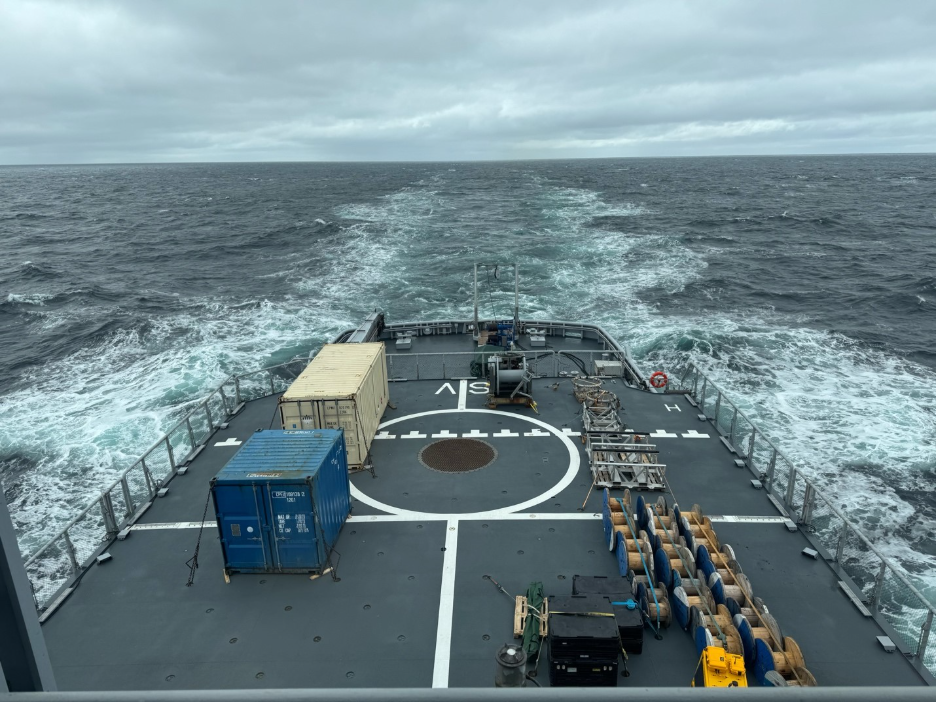
On 17 August, scientists, engineers, and students from Norway, Poland, and the United States embarked the HiAOOS 2026 expedition aboard the Norwegian Coast Guard vessel (NoCGV) Svalbard.
Over the course of more than five weeks, the research team will operate in the Nansen and Amundsen Basins of the Arctic Ocean. They will carry out a broad range of scientific measurements in one of the world’s most challenging environments: the ocean beneath the Arctic sea ice where space born satellites cannot observe.
Together with the crew onboard NoCGV Svalbard, the scientific team will recover the HiAOOS network of six deep-ocean moorings, recover one mooring for the Alfred Wegener Institute for Polar and Marine Research, deploy several profiling floats supporting the Euro-Argo research infrastructure, contribute to the International Arctic Buoy Programme and Polhavet 2050 through the deployment of ice-tethered observatories. The cruise also supports the the educational program Useful Arctic knowledge (https://uak.nersc.no/about) and Float Your Boat outreach program.
Operating in the ice-covered Arctic Ocean is both demanding and complex. The seven moorings are distributed across a vast area, with distances of 400 to 1,000 kilometers between sites, requiring long transits through regions of variable sea-ice conditions. Efficient route planning is essential to minimize transit time, reduce fuel consumption, and ensure safe operations. The ship’s officers continuously assess ice conditions, seeking navigable leads and avoiding areas of heavy or ridged ice whenever possible. An important thing is to get back the moorings within the time frame of the cruise.
Recovering the moorings is among the most challenging tasks of the expedition. Over several years, the scientists and crew aboard NoCGV Svalbard have developed effective procedures for deploying and recovering advanced deep-water observatories in ice-covered waters. Nevertheless, each recovery remains a complex and potentially risky operation, particularly when ice conditions are unfavorable or the mooring becomes trapped beneath drifting sea ice. Each recovery is expected to require between one and a half and two days and depends on careful planning, favorable weather and ice conditions, and close cooperation between the scientific team and the vessel’s crew.
Once recovered, the instruments will undergo data retrieval, inspection, maintenance, and calibration. The observations collected over the past two years will provide valuable insights into how the ocean is stratified and circulates, sea-ice variability, and ongoing environmental changes in the Arctic Ocean. These two-year-long time series represent an important first step toward establishing sustained observations in the deep Arctic. Long-term measurements are essential for distinguishing short-term variability from long-term trends and for improving our understanding of a rapidly changing Arctic environment.
The future continuation of the observing network will depend on the availability of funding and logistical support. Nevertheless, the 2026 expedition marks another important milestone in the HiAOOS effort to develop the technologies, infrastructure, and international partnerships needed to observe, understand, and monitor the Arctic Ocean for the long term.
The HiAOOS 2026 cruise with KV Svalbard supports the HiAOOS-High Arctic Ocean Observation System (hiaoos.eu) and HiAATS -High Arctic Acoustic Thermometry and Soundscape projects, funded by the European Union and the Office of Naval Research, respectively. The cruise will also provide field support for several Research Council of Norway projects, including SFI Smart Ocean (https://sfismartocean.no/spring-conference-2026-sfi-smart-ocean/), Useful Arctic Knowledge (UAK)(https://uak.nersc.no/about), and Polhavet 2050 ((https://uit.no/arcticocean2050), as well as an ESA project, thereby maximizing the scientific and operational value of the expedition. The cruise supports the Float Your Boat program.
In total 24 scientists, engineers, and students from Nansen Center, Scripps Institution of Oceanography, Woods Hole Oceanographic Institution, Institute of Oceanology Polish Academy of Sciences, Norwegian Polar Institute, Meteorological Institute in Norway, and University of Bergen are involved in the HiAOOS 2026 expedition.
The expedition is led by HiAOOS Coordinator Hanne Sagen, Research leader at the Nansen Environmental and Remote Sensing Center (NERSC) together with Captain Geir Martin Leienebø.
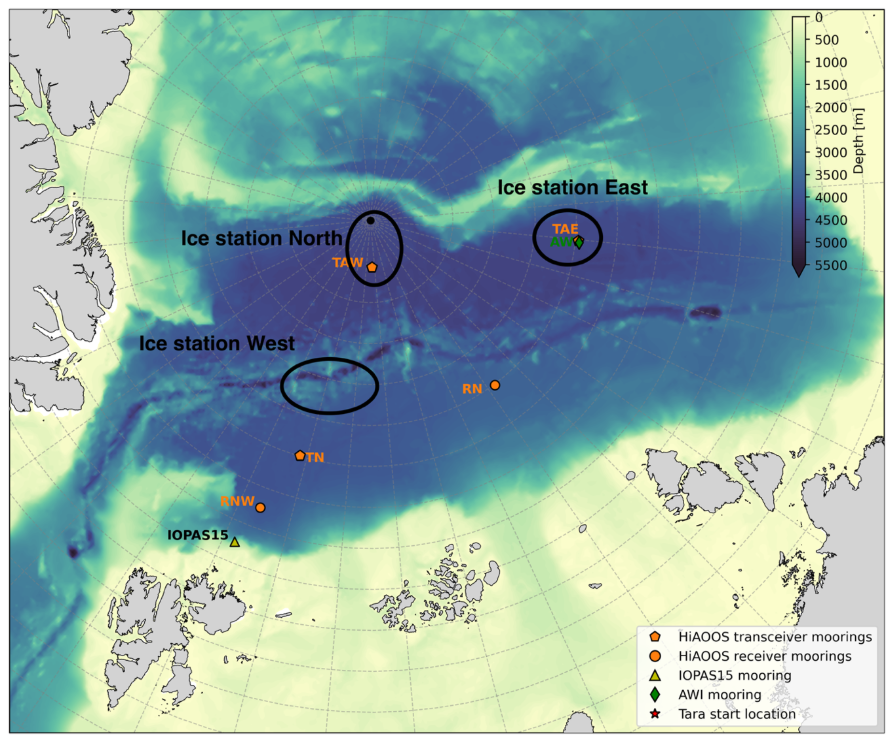
Figure 1. The experiment area with moorings. The moorings in red forms the HiAOOS multipurpose mooring network.
The positions of the Ice Stations will be ajusted according to the ice conditions.
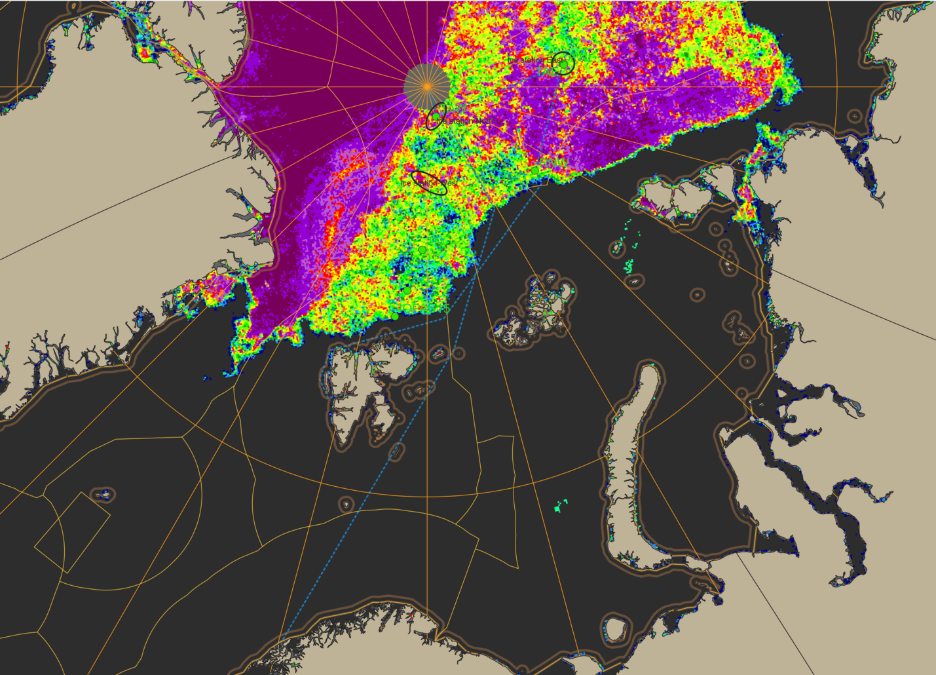
Figure 2. The ice conditions. Green and yellow is less ice and the areas that we prefer to operate in. Blue line shows the track we plan to follow.
Figure 3. NoCGV Svalbard on its way to Polar ocean through the Barents Sea. Many wooden reels are needed to store more than 20 kilometer wire and kevlar.
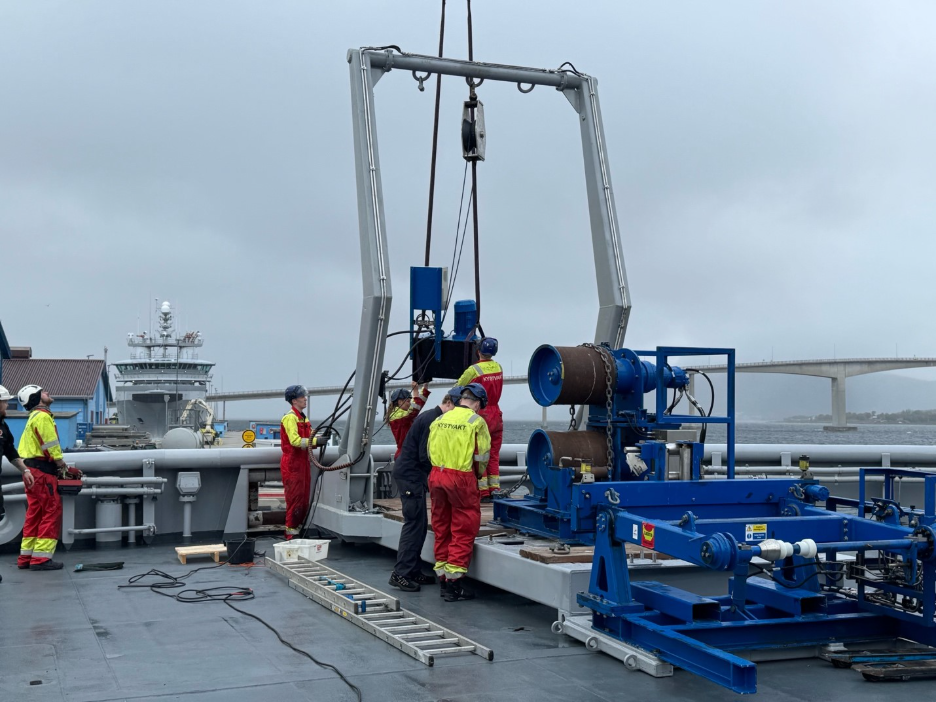
Figure 4. The new A-frame and winch will make us better prepared for mooring deployments in the ice..