
A Fleet of Small Wooden Boats on Its Way to the North Pole
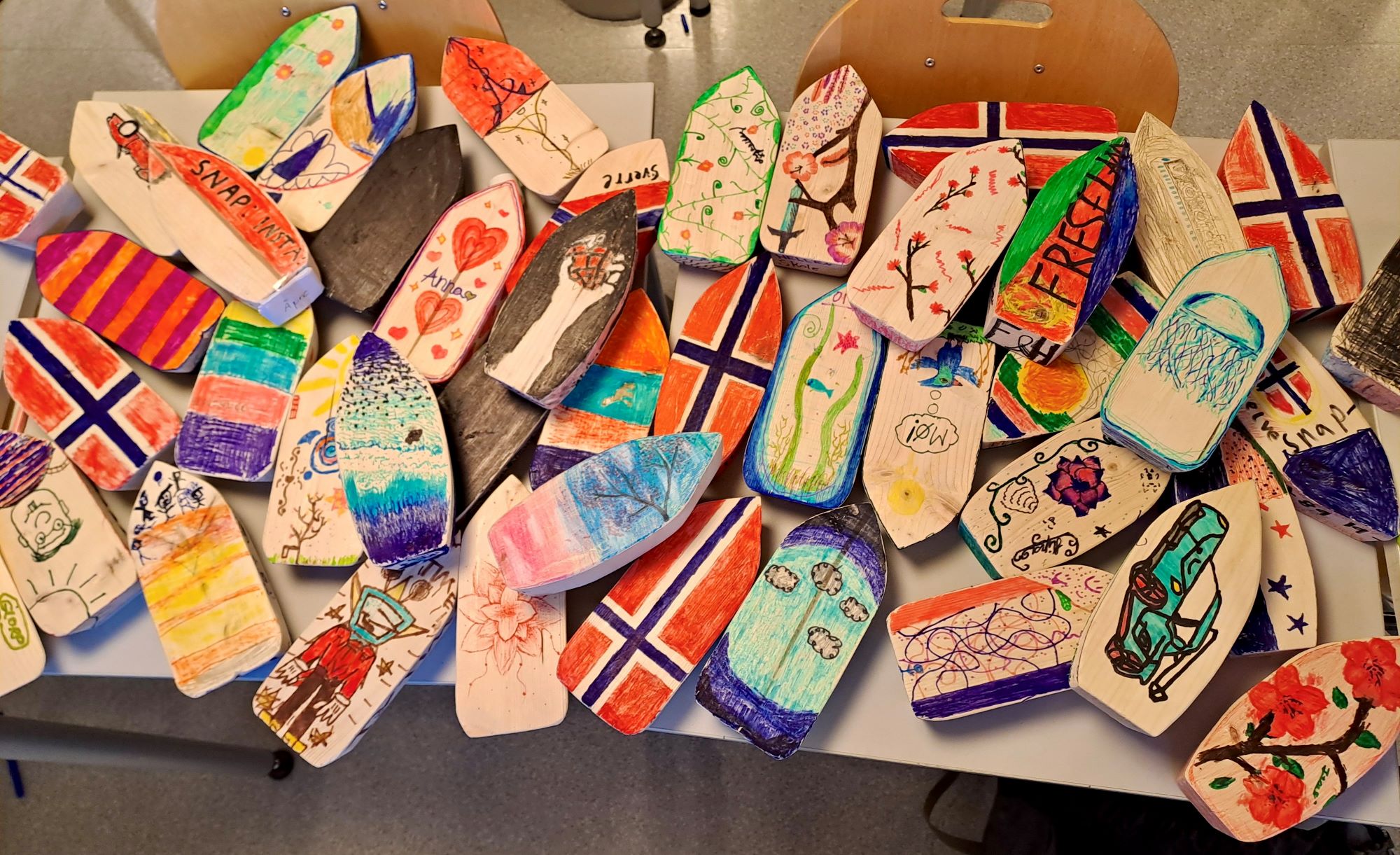
Four hundred small, hand-decorated wooden boats are now heading north aboard the Norwegian Coast Guard icebreaker KV Svalbard. Their destination is the North Pole, but reaching it is far from guaranteed. Massive ice floes, dense pack ice, and rapidly changing weather conditions can make it impossible to reach all the way to the Pole. Regardless of how far north the ship reaches, the boats will be placed on the sea ice alongside an observation buoy that scientists will deploy on the ice. When KV Svalbard turns south again, a new journey begins: the buoy and the wooden boats will be left to the forces of nature, drifting with the sea ice within the vast, frozen Arctic Ocean.
As autumn and winter progress, the sea ice freezes and thickens. It becomes more stable and keeps the wooden boats far to the north for the winter. By then, KV Svalbard has long since returned south. However, the researchers can still track both the buoy and the boats around it: The buoy is equipped with GPS, and its position is updated daily, so we know at all times where the ice floe carrying the boats is located.
When spring arrives, the ice cover begins to break up. Eventually, the ice floe supporting the boats and buoy will likely melt, as the sea ice drift mainly transports the ice southwest towards Greenland and Svalbard. At that point, the buoy and the boats part ways. Some of the wooden boats will drift ashore in Greenland, others in Iceland or along the Norwegian coast. We know this because the boats are occasionally found. Each boat is labeled with a registration number and a web address. Anyone who finds a boat can register the location online and contribute to the research.
Such a journey can take many months, often several years. Using drifting buoys, researchers can study how sea ice moves without having to spend the winter trapped in the ice themselves, as Fridtjof Nansen and the crew of the Fram did in the late nineteenth century. While Nansen spent three years frozen into the Arctic Ocean, today’s researchers can return home after just a few weeks at sea and let the instruments collect data throughout the year.
The boats have been decorated by primary school students from Norway, the United States, and Poland, as part of the outreach project Float Your Boat, initiated by the International Arctic Buoy Programme. In May and June, Vår Dundas from the Nansen Center visited several schools in the Bergen area to talk about the Arctic, the ocean, Nansen’s expedition, and climate change. The students then decorated their own wooden boats, which are now ready to accompany the expedition into the Arctic Ocean.
The aim is to spark curiosity and increase knowledge about the Arctic, the climate, and the natural environment. The project provides the students with a tangible connection to scientific research and to the regions where researchers work. The response from school classes is often marked by great enthusiasm and many questions, which also gives researchers renewed motivation to share their work.
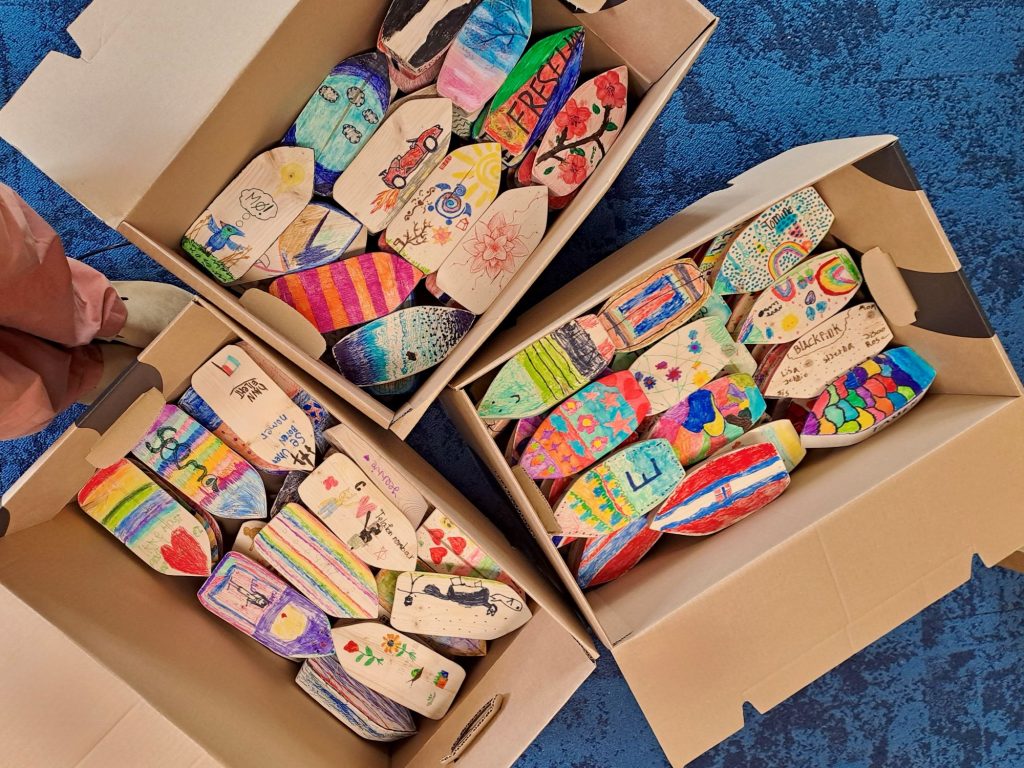
The wooden boats and observation buoys are being deployed during a six-week HiAOOS research expedition aboard KV Svalbard, led by the Nansen Center. Whether the boats will make it all the way to the North Pole depends on the sea ice conditions that KV Svalbard encounters on its journey north. The answer to that question will only be clear in a few more weeks.
Norwegian version:
Fire hundre små, hånddekorerte trebåter er nå på vei nordover ombord på Kystvaktens isbryter KV Svalbard. Målet er selve Nordpolen, men å nå denne destinasjonen er ingen selvfølge. Massive isflak, tett pakkis og skiftende værforhold kan gjøre det umulig å nå helt frem. Uansett hvor langt nord skipet når, skal båtene settes ut på havisen sammen med en observasjonsbøye som forskerne plasserer på isen. Når KV Svalbard setter kursen sørover igjen, begynner en ny ferd: Bøyen og trebåtene overlates til naturkreftene og driver videre med havisen gjennom det enorme og iskalde Polhavet.
Utover høsten og vinteren fryser havisen til. Isen blir tykkere og mer stabil, og trebåtene overvintrer langt mot nord. På dette tidspunktet har KV Svalbard for lengst returnert sørover, men forskerne kan fortsatt følge bøyen og båtene rundt den: Bøyen er utstyrt med GPS, og posisjonen oppdateres daglig slik at vi hele tiden vet hvor isflaket med båtene befinner seg.
Når våren kommer, sprekker isdekket opp. Etter hvert smelter sannsynligvis isflaket som båtene og bøyen ligger på, for isen transporteres stort sett sørvestover mot Grønland og Svalbard. Da skiller bøyen og båtene lag. Noen av trebåtene vil drive i land på Grønland, andre på Island eller langs norskekysten. Dette vet vi fordi båtene av og til blir funnet. På undersiden har hver båt et registreringsnummer og en nettadresse. Den som finner båten kan registrere funnstedet på nettet og bidra til forskningen.
En slik reise kan ta mange måneder, ofte flere år. Ved hjelp av drivbøyer kan forskerne studere hvordan havisen beveger seg uten selv å måtte overvintre i isen, slik Fridtjof Nansen og mannskapet på Fram gjorde på slutten av 1800-tallet. Mens Nansen tilbrakte tre år fastfrosset i Polhavet, kan dagens forskere reise hjem etter noen uker til sjøs og la instrumentene samle inn data gjennom hele året.
Båtene er dekorert av barneskoleelever fra Bergen, USA og Polen som en del av formidlingsprosjektet Float Your Boat, startet opp av International Arctic Buoy Programme. I mai og juni besøkte Vår Dundas fra Nansensenteret flere skoler i Bergensområdet for å fortelle om Arktis, havet, Nansens ekspedisjon og klimaendringene. Deretter fikk elevene dekorere hver sin trebåt, som nå blir med ut i Polhavet.
Målet er å vekke nysgjerrighet og øke kunnskapen om Arktis, klimaet og naturen. Prosjektet gir skolebarna en konkret kobling til forskningen og til områdene forskerne arbeider med. Responsen fra skoleklassene er ofte preget av stort engasjement og mange spørsmål, noe som også gir forskerne ny motivasjon til å formidle arbeidet sitt.
Trebåtene og observasjonsbøyene settes ut under et seks uker langt HiAOOS-forskningstokt med KV Svalbard, ledet av Nansensenteret. Hvorvidt båtene kommer seg helt opp til Nordpolen er avhengig av sjøisforholdene KV Svalbard møter på vei nordover. Svaret på akkurat det får vi først om noen uker.