
First HiAOOS Mooring Recovered and First Euro-Argo Float Deployed in the Arctic Ocean
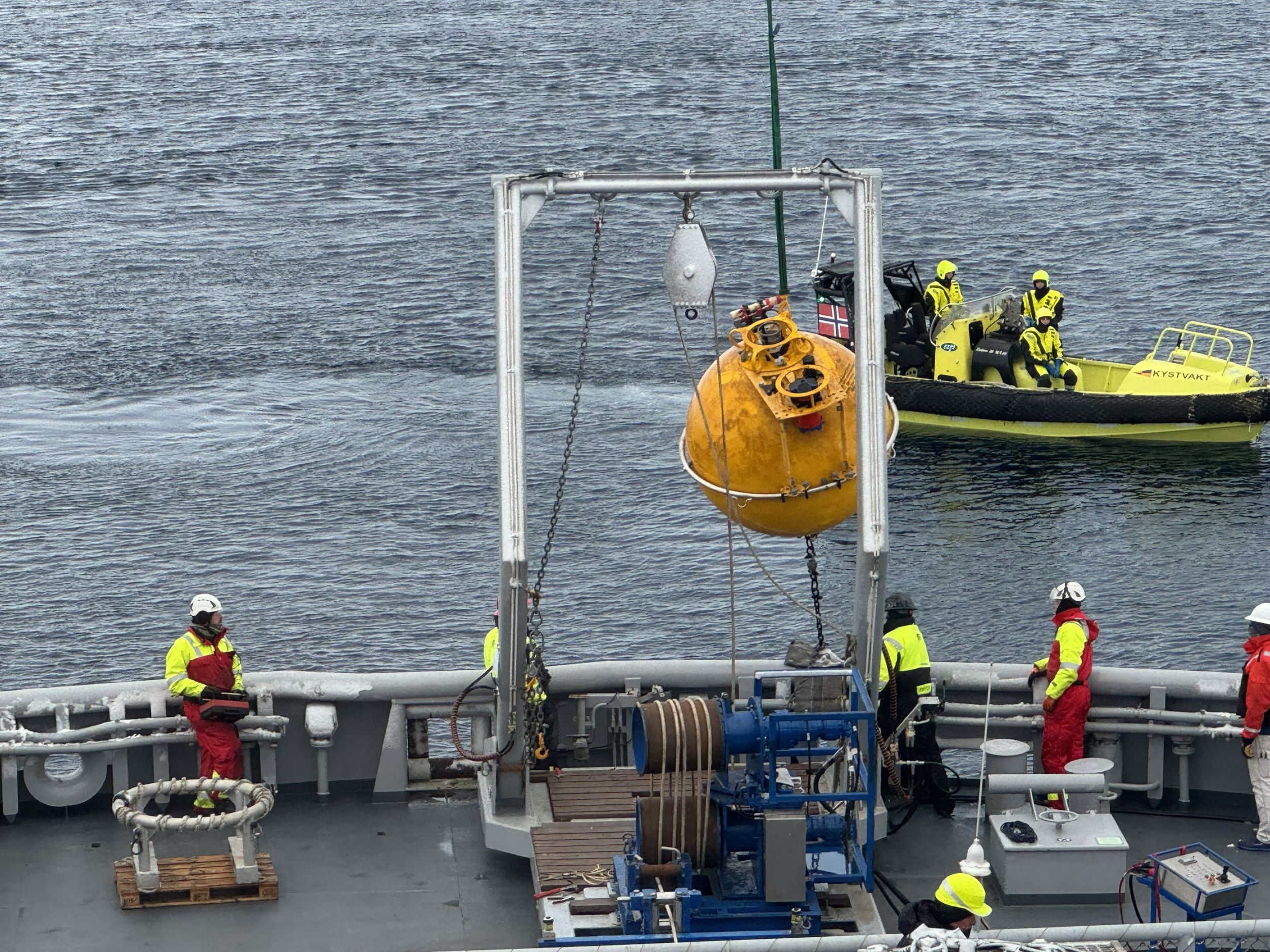
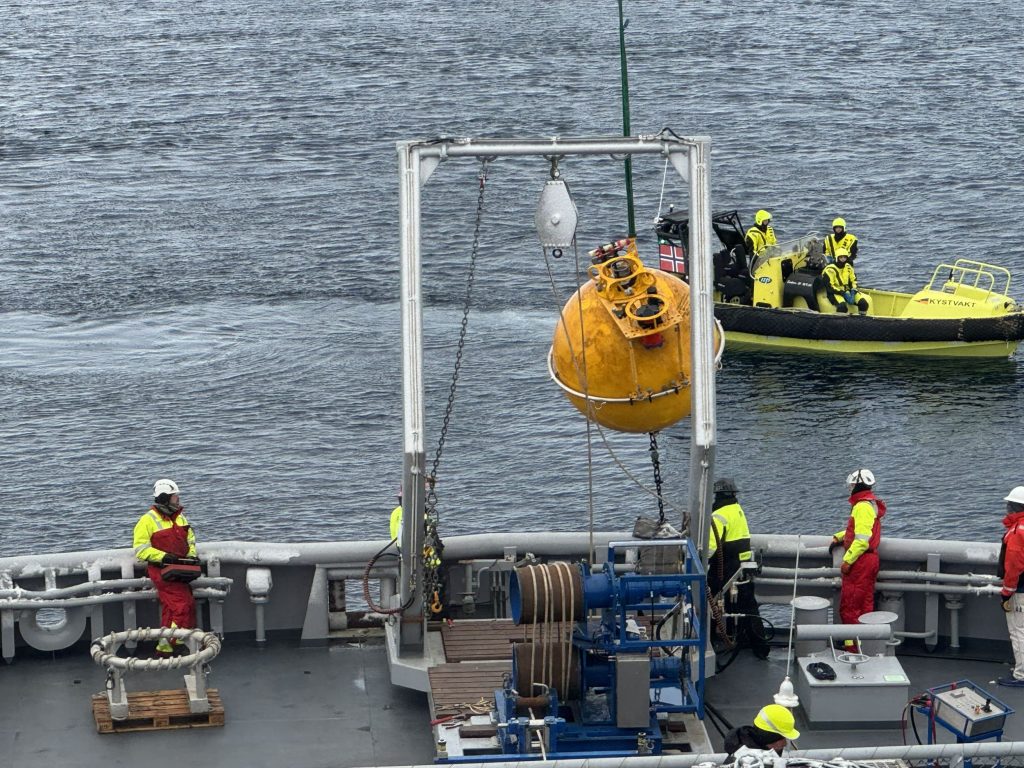
On 22 August, the RN mooring was successfully recovered from the Arctic Ocean. This marks the first recovery of five HiAOOS multipurpose moorings scheduled for retrieval during this year’s expedition with KV Svalbard. The mooring was deployed two years ago at a water depth of 3,700 m, extending vertically through the water column from the seabed to 45 m below the surface. Over the past two years, its instruments have collected high-resolution observations of ocean temperature, salinity, pressure, sea-ice conditions, and upper-ocean currents in the international sector of the eastern Nansen Basin. This was also the first mooring recovery conducted using our new A-frame in combination with the LEBUS traction winch.
The mooring is equipped with an array of hydrophones that receive acoustic signals transmitted from source moorings located approximately 500 km away. By measuring the travel times of these signals, researchers can estimate large-scale changes in ocean temperature along three key sections of the Arctic Ocean. This acoustic thermometry approach provides a unique view of temperature variability across vast regions that cannot be monitored by conventional observing methods alone.
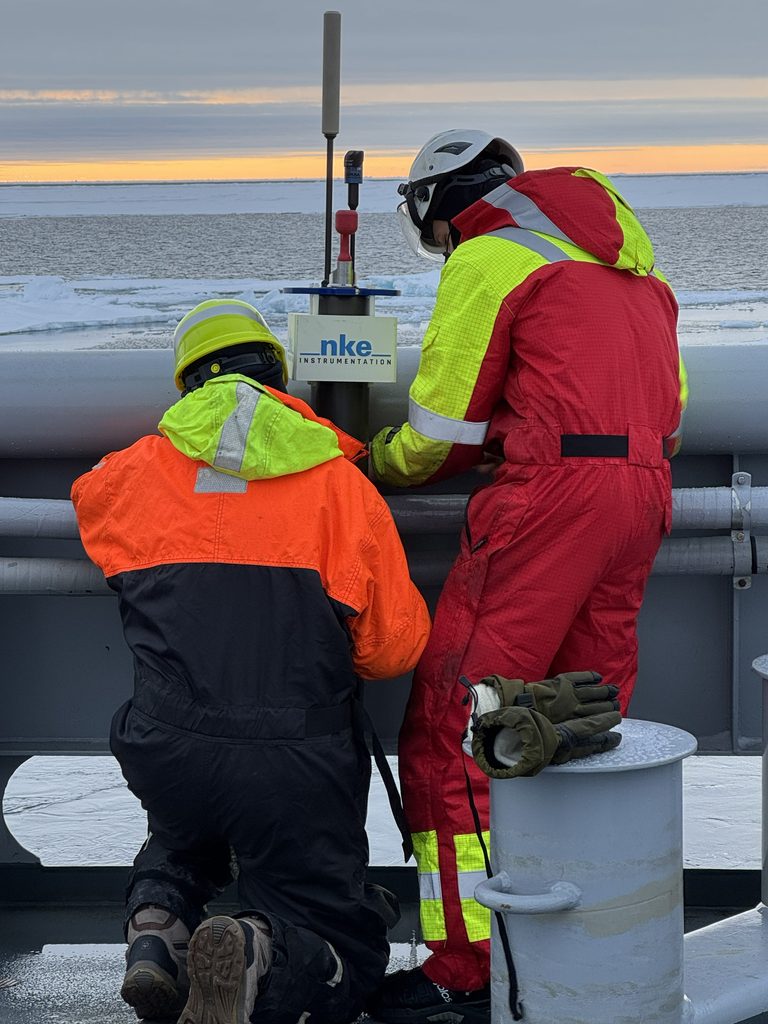
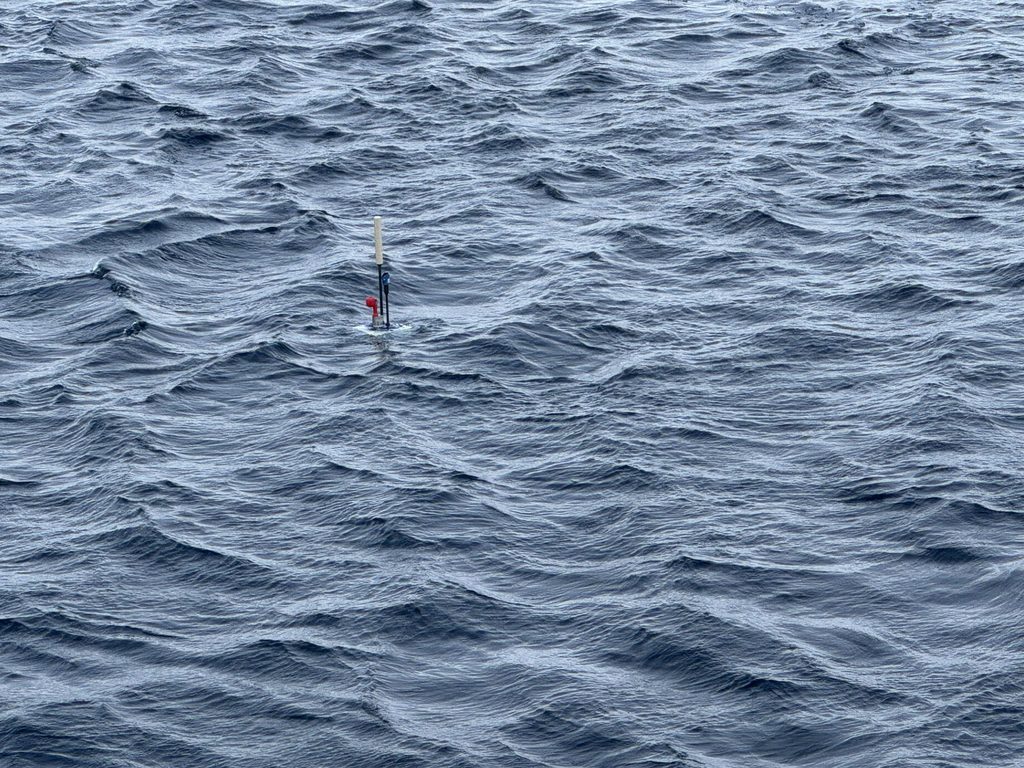
On the same day, the first of five profiling floats for the Euro-Argo Research Infrastructure was deployed. The float is expected to drift beneath the sea ice while repeatedly profiling the water column. If the float becomes trapped under the ice and is unable to surface for shorter or longer periods, it will continue collecting valuable ocean measurements, although its exact position during those observations will remain unknown. In some regions, its trajectory can be estimated with reasonable accuracy, but in the deep ice-covered Arctic basins such estimates are highly uncertain.
The combination of fixed moorings and drifting profiling floats provides a new and more complete picture of the ocean beneath the Arctic sea ice. While the moorings deliver continuous time series from strategic locations, the floats sample conditions over much larger areas. Together, they provide unique insights into ocean variability and change in regions that remain among the most challenging to observe on Earth.
In addition to climate observations, the acoustic recordings from the HiAOOS network provide two years of information on Arctic seismic activity and marine mammals. The combination of environmental monitoring, underwater acoustics, and basin-scale ocean sensing demonstrates the broad value of sustained Arctic observing systems for both scientific research and operational awareness in a rapidly changing Arctic.
Pictures by Hanne Sagen (NERSC) and Geir-Martin Leinebø (Kystvakten)